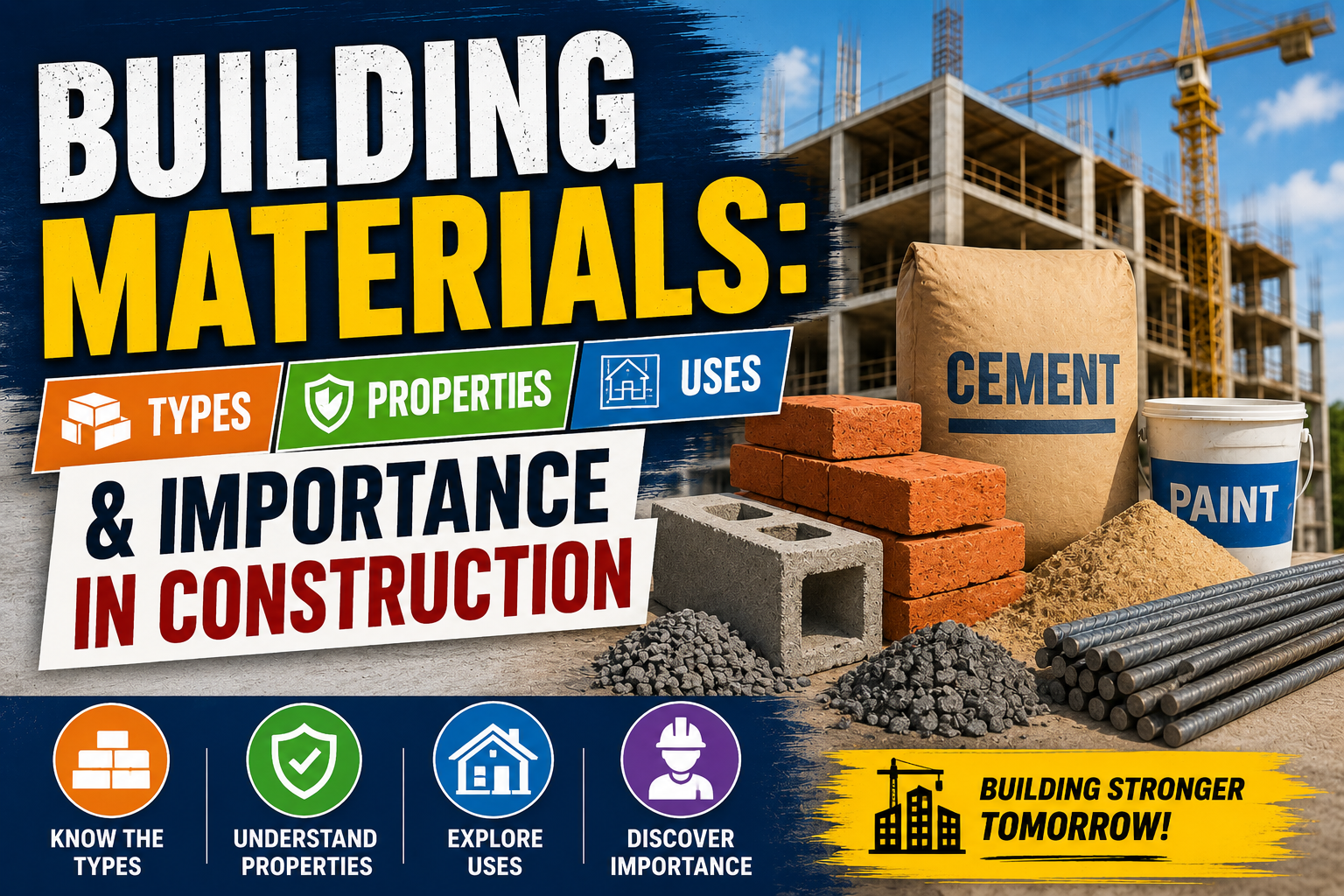
Building Materials
Types, Properties, Uses, and Importance in Construction
Introduction
Building materials are the backbone of every construction project. From small houses to massive bridges, the quality of materials directly affects the strength, durability, and safety of a structure. Choosing the right building material is very important in civil engineering and modern construction.
In this article, you will learn about different types of building materials, their properties, uses, advantages, and importance in construction work. This guide is written in simple English for students, beginners, and competitive exam preparation.
What Are Building Materials?
Building materials are substances used for constructing buildings, roads, bridges, dams, and other structures. These materials provide strength, stability, durability, and appearance to a construction project.
Examples of Building Materials
- Cement
- Sand
- Bricks
- Steel
- Concrete
- Wood
- Glass
- Stone
- Aluminum
- Tiles
Importance of Building Materials
Building materials play a major role in construction quality and structural safety.
Key Importance
- Provide strength and durability
- Increase the life of structures
- Improve safety and stability
- Enhance appearance and finishing
- Reduce maintenance costs
- Improve energy efficiency
Types of Building Materials
Building materials can be classified into natural and artificial materials.
| Type | Examples |
| Natural Materials | Stone, wood, sand, clay |
| Artificial Materials | Cement, concrete, steel, glass |
Common Building Materials Used in Construction
1. Cement
Cement is one of the most important construction materials. It acts as a binding material in concrete and mortar.
Types of Cement
- Ordinary Portland Cement (OPC)
- Portland Pozzolana Cement (PPC)
- Rapid Hardening Cement
- White Cement
Uses of Cement
- Concrete work
- Plastering
- Brick masonry
- Flooring
Advantages
- High strength
- Durable
- Easy to use
2. Concrete
Concrete is a mixture of cement, sand, aggregate, and water.
Basic Concrete Mix Formula
Concrete = Cement + Sand + Aggregate + Water
Concrete becomes very strong after hardening and is widely used in buildings and bridges.
Uses of Concrete
- Foundations
- Columns
- Beams
- Slabs
- Roads
Advantages
- Strong in compression
- Fire resistant
- Durable
3. Bricks
Bricks are rectangular blocks made from clay and used in masonry construction.
Properties of Good Bricks
- Uniform shape
- Hard and durable
- Free from cracks
- Good water resistance
Uses of Bricks
- Wall construction
- Partition walls
- Pavements
4. Steel
Steel is a strong material mainly used for reinforcement in RCC structures.
Properties of Steel
- High tensile strength
- Flexible
- Durable
- Recyclable
Uses of Steel
- Reinforcement bars
- Bridges
- Industrial buildings
- Roof structures
5. Sand
Sand is a fine granular material used in concrete and mortar.
Types of Sand
- River Sand
- Manufactured Sand (M-Sand)
- Pit Sand
Uses of Sand
- Plastering
- Concrete making
- Masonry work
6. Stone
Stone is a natural building material used since ancient times.
Common Types of Stones
- Granite
- Marble
- Limestone
- Sandstone
Uses of Stone
- Flooring
- Wall cladding
- Foundations
- Decorative work
7. Wood
Wood is a traditional construction material mainly used for doors, windows, and furniture.
Advantages of Wood
- Easy to work with
- Attractive appearance
- Good insulation properties
Uses
- Furniture
- Roofing
- Doors and windows
8. Glass
Glass is widely used in modern buildings for decorative and lighting purposes.
Types of Glass
- Toughened Glass
- Laminated Glass
- Frosted Glass
Uses of Glass
- Windows
- Facades
- Interior decoration
Properties of Good Building Materials
A good building material should have the following properties:
- Strength
- Durability
- Workability
- Fire resistance
- Water resistance
- Low maintenance
- Eco-friendliness
Factors Affecting Selection of Building Materials
Several factors are considered while choosing construction materials.
Important Factors
- Cost
- Strength
- Durability
- Availability
- Weather conditions
- Maintenance
- Appearance
Modern Building Materials
Modern construction uses advanced materials for better performance and sustainability.
Examples
- Fly ash bricks
- Fiber reinforced concrete
- AAC blocks
- Ready mix concrete
- Green concrete
Benefits
- Eco-friendly
- Lightweight
- Better insulation
- Faster construction
Difference Between Traditional and Modern Building Materials
| Traditional Materials | Modern Materials |
| Heavy weight | Lightweight |
| Less eco-friendly | Environment friendly |
| More labor required | Faster construction |
| Lower insulation | Better thermal insulation |
Advantages of Quality Building Materials
Using high-quality materials provides many benefits.
Benefits
- Long-lasting structures
- Reduced repair cost
- Better safety
- Improved appearance
- Increased property value
Building Material Testing
Testing helps determine the quality and strength of materials.
Common Tests
| Material | Test |
| Cement | Fineness Test |
| Concrete | Compression Test |
| Steel | Tensile Test |
| Bricks | Water Absorption Test |
Sustainable and Eco-Friendly Building Materials
Green construction is becoming popular worldwide.
Eco-Friendly Materials
- Bamboo
- Fly ash bricks
- Recycled steel
- Green concrete
Advantages
- Reduce pollution
- Save energy
- Lower environmental impact
Conclusion
Building materials are essential for every construction project. Selecting the right materials improves the strength, durability, safety, and appearance of structures. Materials like cement, concrete, steel, bricks, and sand are widely used in civil engineering and modern construction.
Understanding the properties and uses of building materials is very important for students, engineers, contractors, and competitive exam aspirants.
FAQs
1. What are building materials?
Building materials are materials used for constructing buildings, bridges, roads, and other structures.
2. Which material is most commonly used in construction?
Concrete is one of the most commonly used construction materials worldwide.
3. What is the difference between cement and concrete?
Cement is a binding material, while concrete is a mixture of cement, sand, aggregate, and water.
4. Why is steel used in construction?
Steel is used because of its high tensile strength and durability.
5. What are eco-friendly building materials?
Eco-friendly materials are sustainable materials that reduce environmental impact, such as bamboo and fly ash bricks.
About the Author